

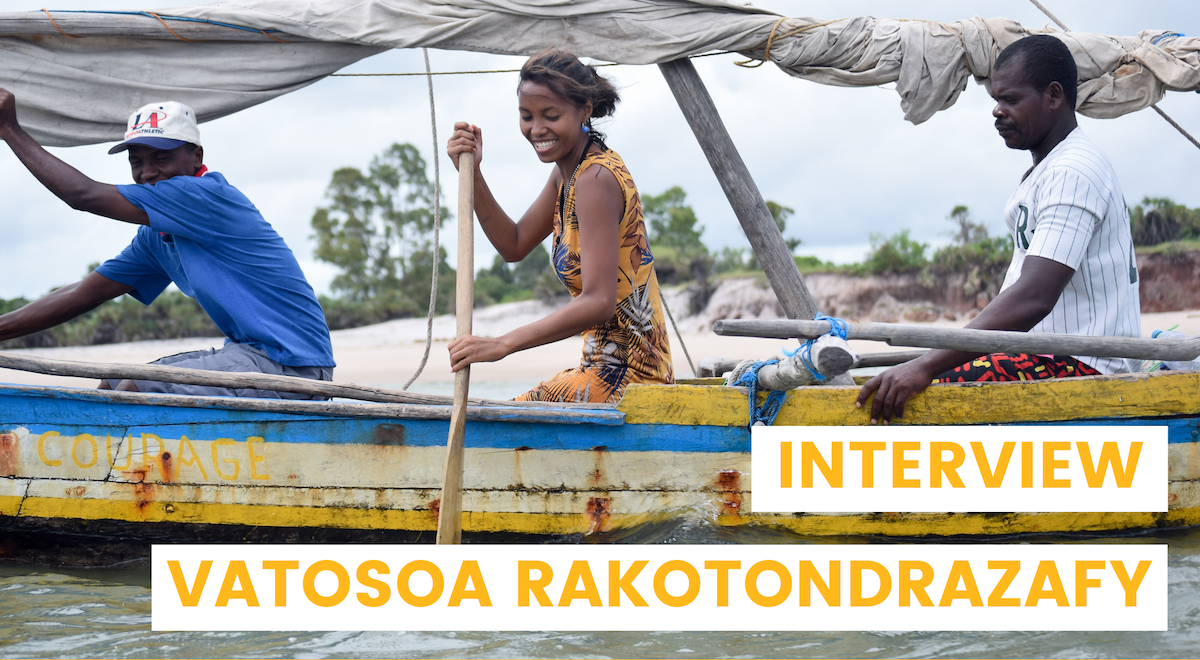
Vatosoa is a civil society leader who has been engaged for 8 years in better managing Madagascar’s marine resources. She looks back on her journey and tells us about the Blue Agora, an innovative initiative to address the country’s coastal and marine challenges.
With 5,600 km of coastline rich in productive ecosystems (reefs, mangroves, seagrass beds), Madagascar offers significant potential for the blue economy in sectors such as sustainable fishing, aquaculture, and ecotourism. However, the coastline is fragile, often shows signs of degradation and overexploitation, and is home to some of the country’s most vulnerable communities. Despite the genuine dynamism of certain stakeholders, there is currently no real collective vision for the future of Madagascar’s marine landscapes.
Faced with this situation, INDRI is preparing the launch of a major national initiative: the Blue Agora. The objective: to organize a frank, creative, and productive national dialogue among sea stakeholders, to ensure better management of marine resources. We will draw in particular on the experience gained over the past two years on terrestrial landscapes with the 300 stakeholders of the Alamino initiative for national regreening.
You now have extensive experience in marine conservation — what led you into this field?
Originally, I wasn’t a marine specialist at all. But in 2013 I was lucky enough to be selected to take part in an ocean governance training programme at the University of Halifax in Canada. That’s where I fell in love with the subject and understood how important it is for my country.
A year later, I had the opportunity to do research with the United Nations on strategies to improve fisheries governance in Madagascar. It made me realize how essential the involvement of fishing communities is to preserving coastal ecosystems. Given the limited resources we had at the time, I understood that the best strategy was to strengthen the role of small fishing communities so they could become guardians of the sea.
That’s exactly what I tried to advocate for from 2015 onwards as coordinator of MIHARI, the network that brings together all coastal communities managing Locally Managed Marine Areas (LMMAs).
What were you able to accomplish as MIHARI coordinator?
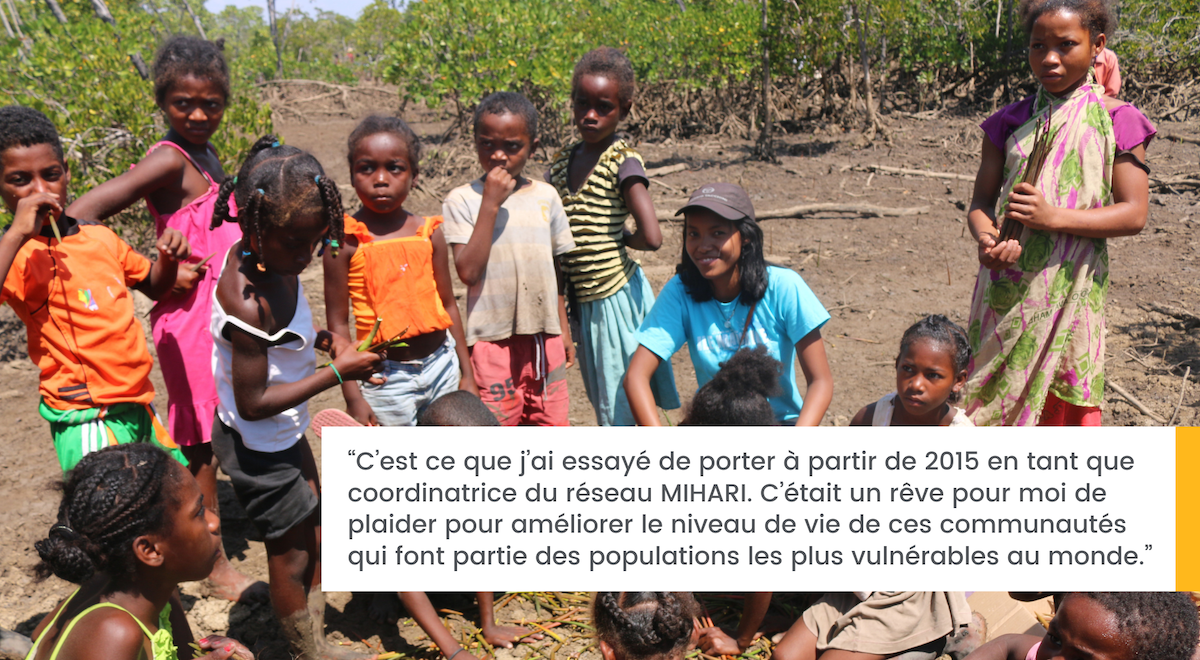
Originally I wanted to become a lawyer to defend the cause of the most vulnerable people. But I didn’t pass the law school entrance exam, and I studied geography instead. So when I was recruited in 2015 by MIHARI to amplify the voice of traditional fishers, it was a dream come true. I had the opportunity to advocate for improving the living conditions of these people, who are among the most vulnerable populations in the world. In a way, I had become a lawyer for small-scale fishers.
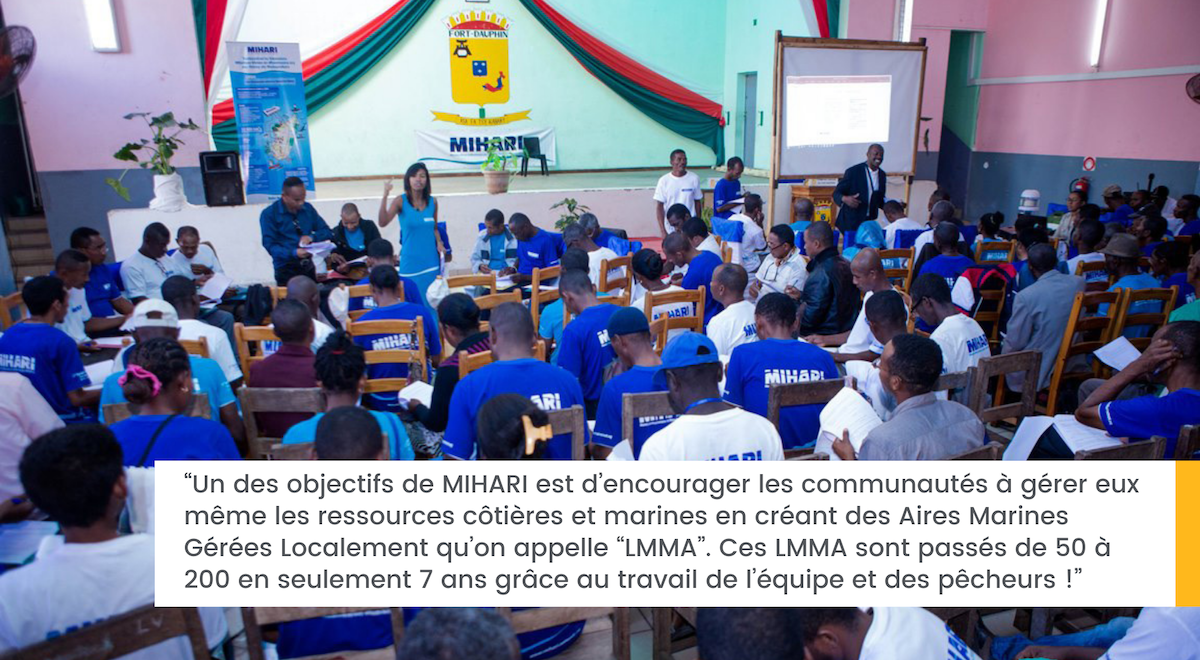
On one hand, we needed to break the isolation of these people who often live in very remote areas and ensure their voices reached other stakeholders (authorities, NGOs, the private sector…). On the other hand, we had to encourage these communities to come together, to coordinate, and to manage coastal and marine resources themselves by encouraging them to create Locally Managed Marine Areas, known as “LMMAs.”
When I joined MIHARI in 2015, there were only 50 LMMAs. Today, thanks to the incredible work of the team and the fishing communities, there are more than 200 across the 13 coastal regions of the country. It was an incredible experience and I learned so much! For me, these fishers are on the same level as people with PhDs in marine science. Once on their pirogue, they know so much!
What changes have these LMMAs (Locally Managed Marine Areas) and the MIHARI network brought about?
You have to understand that the original situation is very critical. Ecosystems are in serious danger because of climate, overfishing, conflicts between local fishers and industrial fisheries, etc. Coral reefs are receding, 20% of mangrove areas have been destroyed in 20 years, and coastal populations dependent on the sea find themselves even poorer and more vulnerable.
Faced with this situation, the work of the MIHARI network with communities is a successful example. The significant increase since 2015 in the number of LMMAs has enabled a real change of behaviour in the right direction. We have seen more and more communities follow local regulations, set up temporary reserves, respect fishing periods to allow for better renewal, and protect and reforest mangroves.
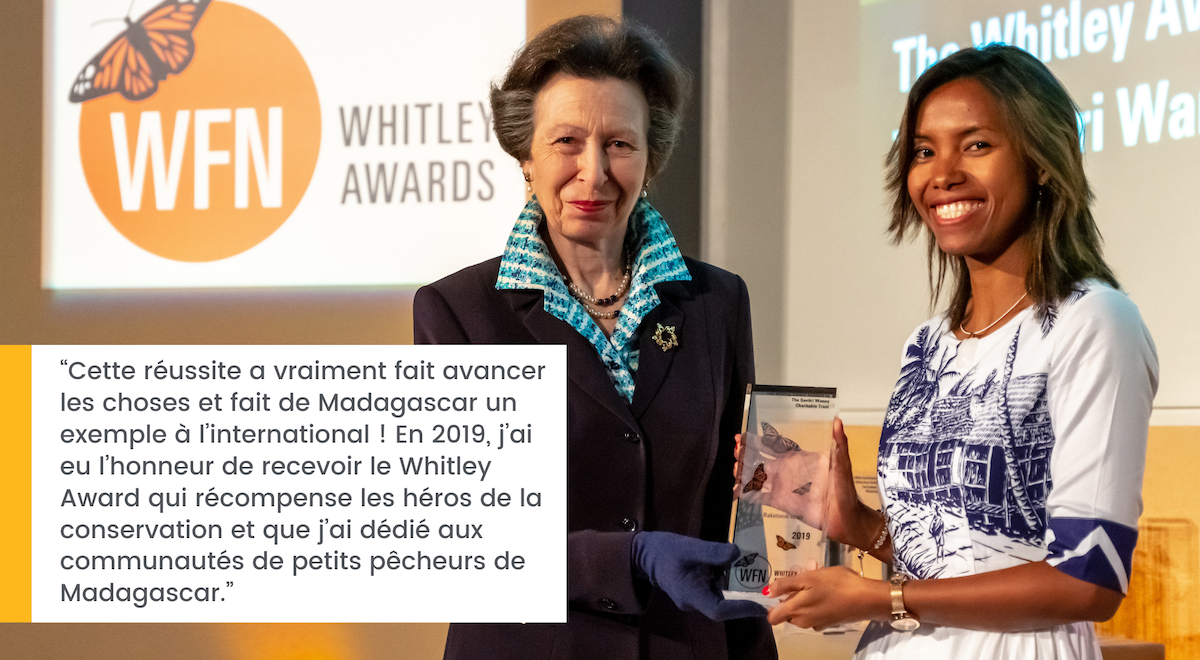
This success makes Madagascar an international example! In 2019, I had the honour of receiving the Whitley Award, which celebrates conservation heroes, and which I dedicated to Madagascar’s LMMA communities — the guardians of the sea.
What challenges remain to be tackled?

The MIHARI network brings together fishing communities and facilitates coordination between these communities and the relevant NGOs. This is a fundamental step for success. To go further, we now need to broaden the dialogue to also include the authorities, the private sector, and donors. Over the years, I have seen certain important issues stall — such as access to fishing zones, regulation of fishing gear, compliance with applicable regulations, access of traditional fishers to markets, and so on. All of this precisely because of a lack of dialogue between local communities and the other stakeholders.
It is clear that there is a missing space to bring together all this diversity of stakeholders on coastal and marine issues — I am certainly not the only one to notice it! I hope that with the Blue Agora soon to be launched by INDRI, we will be able to help stakeholders move in this direction.
What is the Blue Agora?
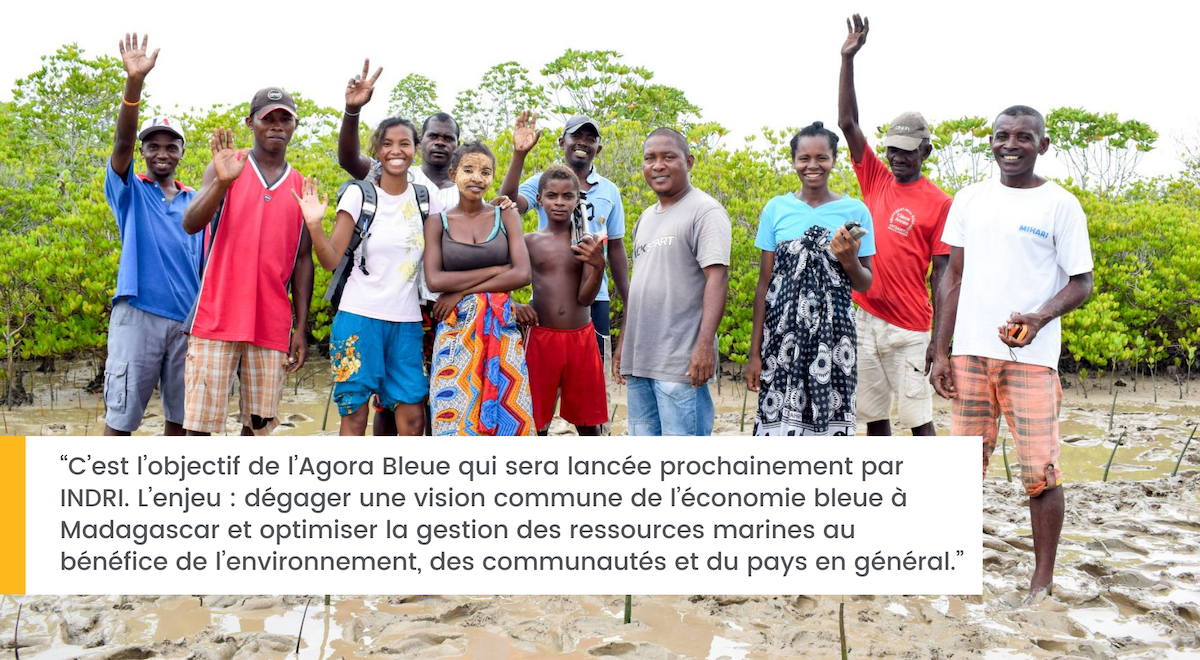
Building on the observation I just shared with you, the Blue Agora’s mission is precisely to bring together at one table communities, donors, NGOs, representatives of the authorities, experts and research institutes, the private sector and civil society, so that they can truly think and build together. For now, this common table does not exist — that’s what INDRI proposes to bring, and that is precisely our expertise: bringing together and coordinating a wide diversity of stakeholders with innovative methods to mobilize collective intelligence.
The challenge is to develop a shared vision of the blue economy in Madagascar — how to optimize the management of coastal and marine resources for the benefit of the environment, communities, the private sector, and the country as a whole. It is also a space that will allow marine stakeholders to share their good practices and pool their efforts. Working closely with the MIHARI network, the initiative also aims to strengthen exchanges and collaboration between local communities and other stakeholders (government, private sector, etc.).
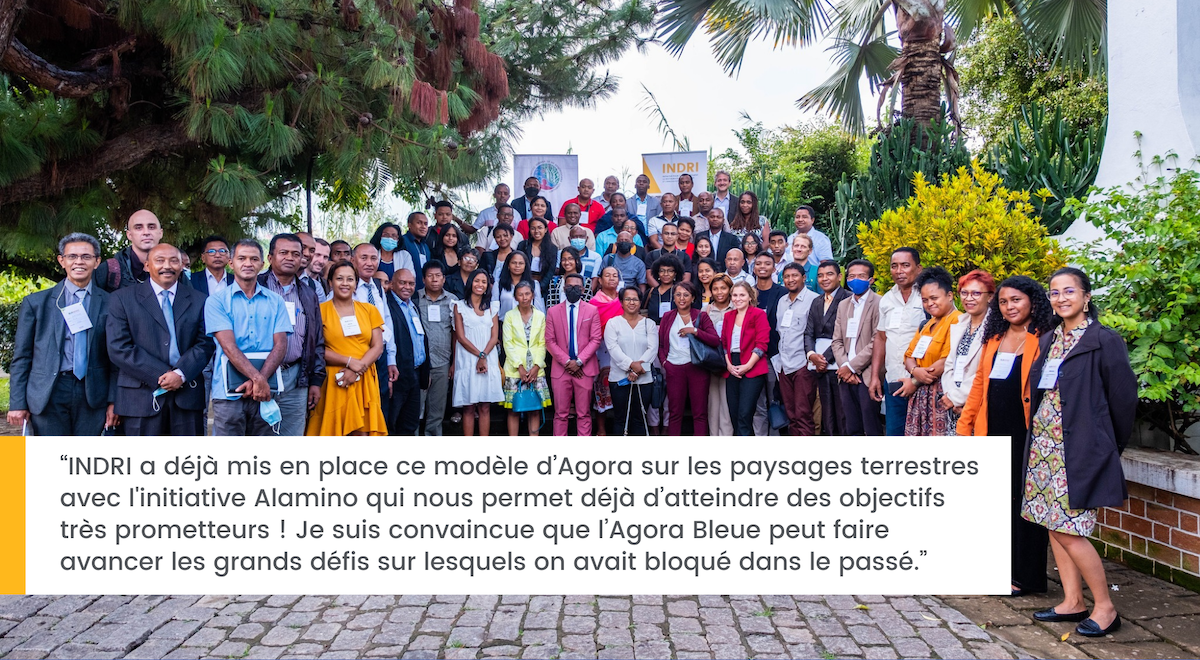
We already have a successful experience with the Alamino initiative, the Agora of Landscapes and Forests of Madagascar, launched by INDRI in 2019 — applying the same stakeholder mobilization methods we now want to bring to coastal landscapes through the Blue Agora. We can see that this Agora model works and meets a real need. Alamino is already achieving very promising results for such a young initiative. It really gives me hope. I am convinced that the Blue Agora will allow us to make progress on the major challenges that have stalled in the past.
Where do we stand on the creation of this Blue Agora?
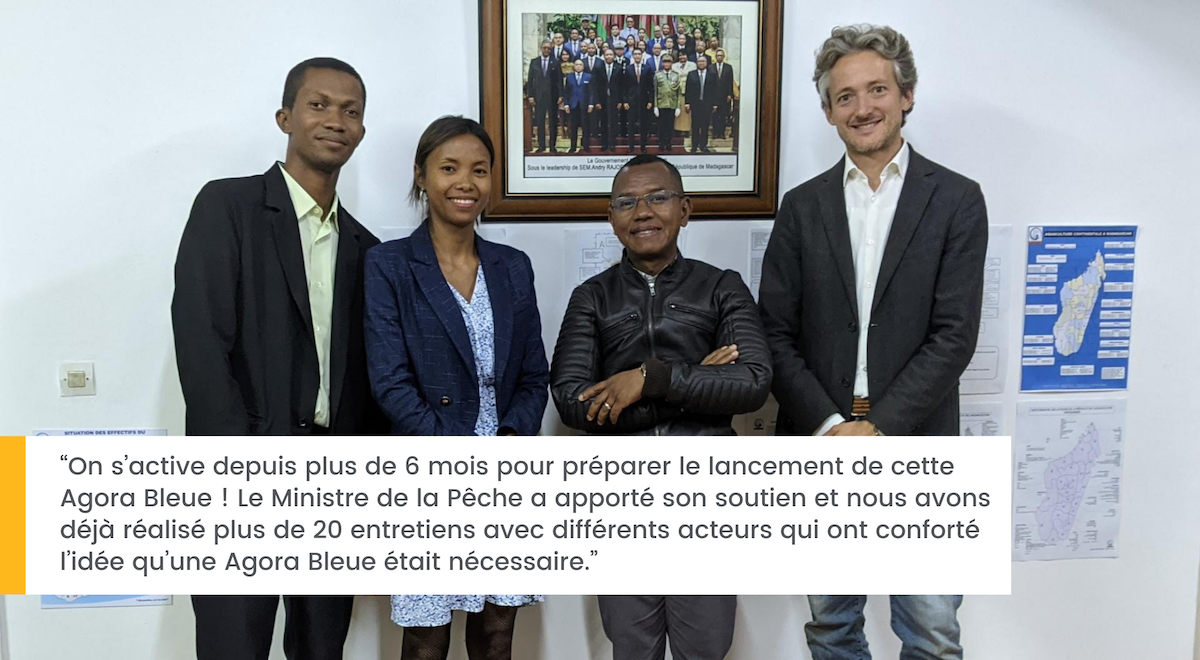
We’ve been actively preparing this launch for over 6 months! And the next 6 months will also be devoted entirely to preparation, to make sure we lay solid foundations. We have already conducted a series of interviews with more than 20 different stakeholders specializing in marine issues (representatives of the authorities, private sector, NGOs, local communities, civil society, and research). The Blue Agora is a genuinely stakeholder-driven initiative. The first step was therefore to fully understand their needs and the challenges they face in order to clarify the role of this future Blue Agora.
These initial interviews have strongly reinforced the idea that a Blue Agora is necessary. Everyone we consulted told us that one of the major problems was precisely the lack of communication and coordination between the different types of stakeholders. We were told that everyone is still working too much on their own side, and that there really is a lack of forums that bring everyone together and facilitate dialogue. To complement these interviews we also met with the Minister of Fisheries, Mr Paubert Tsimanaoraty Mahatante, on May 24, 2022. He gave his full support to the launch of the initiative, and shared how it could support his ministry in the country’s success: bringing together all relevant marine stakeholders in Madagascar around a shared vision and strategy, in order to support the sustainable management of marine ecosystems and resources.
Things are well underway! Thanks to the Whitley Award I received in 2019, the Blue Agora has already received £70,000 in funding which is a great help for the launch. These funds enabled us to recruit a new team member in early May, Jéremie Ndriamanja, who is a marine biologist and oceanographer by training. He is an expert on coastal and marine issues and is already providing valuable help in this preparation phase of the Blue Agora.
What are the next steps now?
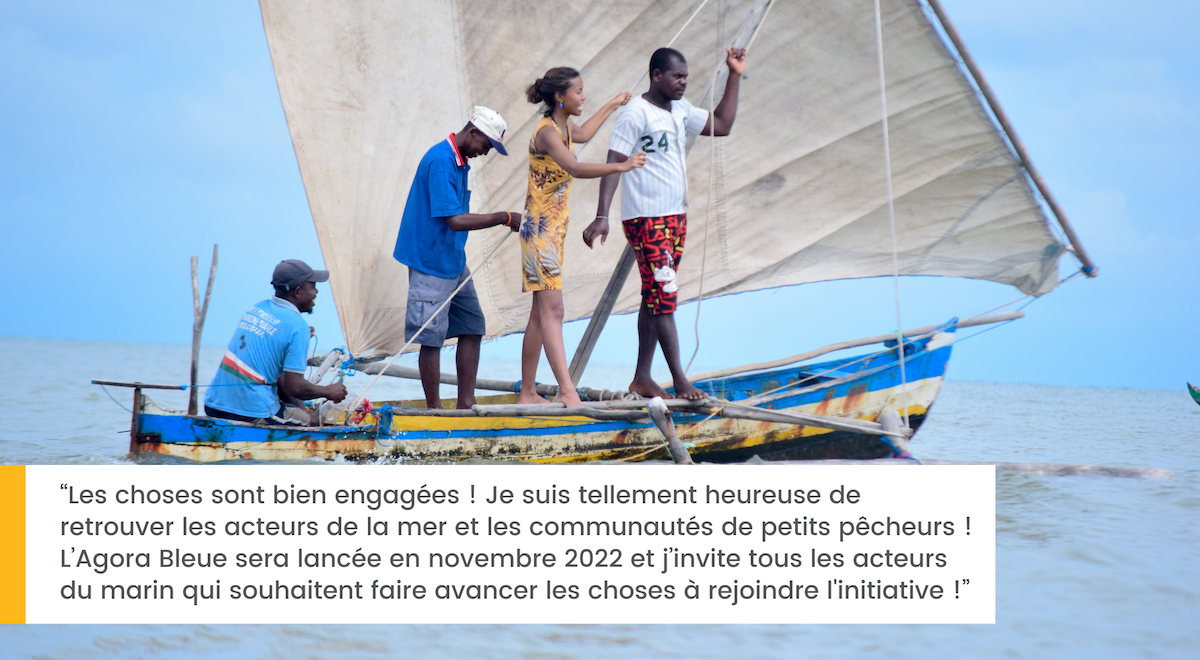
We are currently working to map all the stakeholders who should be involved in the Blue Agora and we are gradually starting to engage them. Interviews with stakeholders continue, and consultations in coastal regions are underway in order to take into account the specific needs and challenges of each area.
I am so happy to be reconnecting with marine stakeholders and small-scale fishing communities! It was one of the best experiences of my life — the chance to defend their voice for 6 years with MIHARI. With the Blue Agora, I want to put myself at their service again, but this time working in a broader way with all stakeholders.
The Blue Agora will be launched in November 2022 and I invite all marine stakeholders who want to move things forward to join the initiative!