'/%3E%3C/svg%3E)


When we talk about regreening Madagascar, we obviously mean reforestation — but not only that! To succeed in the restoration of our landscapes, we need a balance between forests, productive and environmentally friendly agriculture, and sustainable economic activities for the population.
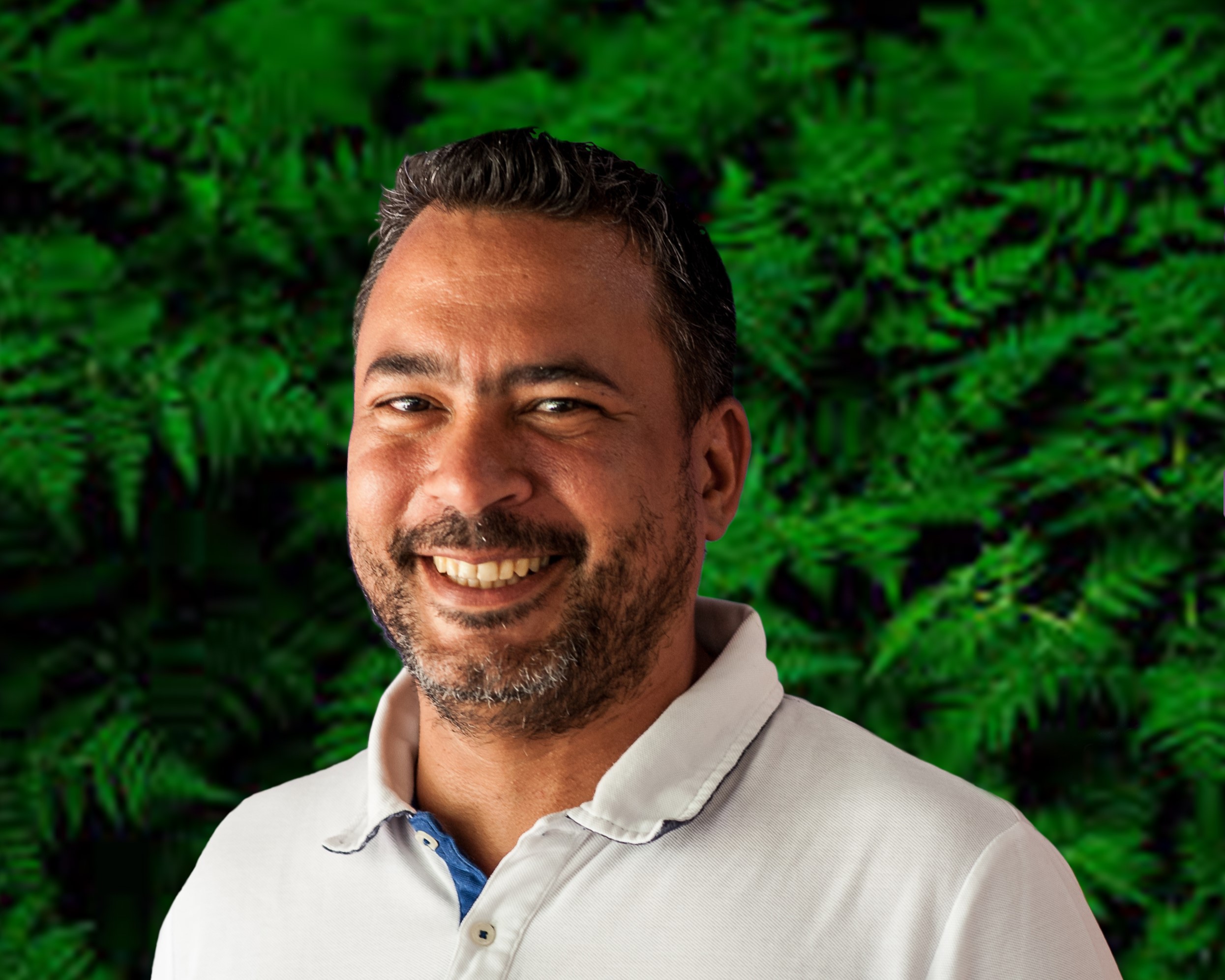
INDRI has recently been fortunate to count Gaëtan Etancelin among its members — an expert on these very issues. With many roles, Gaëtan is notably Director of the Melville Oil Mill at Groupe Savonnerie Tropicale S.A, Vice-President of the Youth and Entrepreneurship Commission within FIV.MPA.MA, and was President of the Malagasy Organic Farming Union from 2017 to 2021.
We turn to him today to discuss the potential of organic farming and sustainable palm oil production as a driver for the country’s development and regreening.
Do you think organic farming can play a role in landscape and forest restoration in Madagascar?
Organic farming is well suited to the country’s context, particularly because it requires few inputs: when you consider that the majority of Malagasy farms are very small and scattered across the territory, it is often not profitable for our farmers to bring in such products to rural areas that are frequently remote.
Furthermore, Madagascar must focus on quality. The battle is lost in advance against the huge plantations one can find in South America, for example. Because of economies of scale, we quickly end up in situations where a kilo of imported corn produced thousands of kilometres away can be cheaper than corn grown in Madagascar and sold in local stores.
On the other hand, thanks to organic farming, our farmers can be very competitive on the international market. One striking proof of the model’s effectiveness is that the number of Malagasy farmers working organically has multiplied by 20 in just 10 years. Today, more than 70,000 are registered and supported!
What are the social and environmental benefits of organic farming?
The absence of products harmful to humans and the environment is a major advantage, but it is far from the only one. While tavy (slash-and-burn agriculture) is a major cause of forest destruction, organic farming cooperatives make it possible to train farmers in alternative practices that are more productive and environmentally friendly. We work in particular with polyculture and agroforestry, which improve soil fertility and resilience to climate change.
All this is done by maximizing the value of traditional knowledge and practices, and through organic cooperatives, farmers can directly see the success of those who have changed model. For example, I know many organic farmers who have been able to send their children to university.
A bill on organic farming in Madagascar, in development since 2018, has just come into force. What does this new legislation provide for?
This law allows organic certification at the scale of an entire territory rather than only at the scale of a single farm. This is a global first! The concept of an “Organic Farming Vocation Territory” makes it easier to access certification, particularly for smallholders, and enables integrated agricultural management at landscape level. We no longer think only at plot level, but truly conceive agriculture in synergy with the entire ecosystem.
Among your activities, you run a palm oil plantation near Toamasina. Palm oil has a poor reputation worldwide, often associated with the destruction of large areas of tropical forests. What makes the situation different here, and how can ecological palm oil production actually contribute to environmental protection?
The practices on our plantation cannot be compared with those of the industrial plantations in Malaysia or Indonesia, which are indeed an ecological disaster. In Madagascar, the land available for agriculture represents 30% of the country’s surface area. That is considerable compared to other regions of the world. This means that here, palm oil production does not need to come at the cost of forest destruction, and can on the contrary become a lever for development and restoration. Following a study by the Proforest organization, our plantation has even been recognized for its high value in terms of conservation and carbon storage. Ecological palm oil production is therefore entirely possible! It is even a necessity given global demand.
The oil palm can be a very interesting crop for soils and biodiversity. It maintains permanent vegetation cover, unlike other oilseed plants such as soybean, rapeseed, or sunflower, which can leave the soil bare and exposed to erosion for part of the year. On our plantation we take this logic even further by growing palm in association with other crops: vanilla, cocoa, ylang, ravintsara, rice, and even market garden plants! Our methods have even been recognized internationally — notably by the “Organic and Fair Palm Oil Production – Assessment Project” which ranks us among the most sustainable plantations in the world.
Finally, on the social side, our single 3,000-hectare plantation provides nearly 600 direct year-round jobs! This is an important point in the fight against poverty and in contributing to the achievement of the Sustainable Development Goals in Madagascar.
To connect with our previous topic: is your palm oil plantation certified organic?
Of course! We were even one of the first palm oil plantations in the world to obtain certification, almost 30 years ago. But that’s not all: the poor image that palm oil carries among consumers has ultimately pushed responsible producers to develop ever more demanding regulations regarding social and environmental impact. The RSPO (Roundtable on Sustainable Palm Oil), created in 2004, is now the reference in sustainable certification. The same goes for the BIOSUISSE regulation, which Madagascar helped develop, positioning itself as an example of ecological palm oil production at the international level.
And palm oil is far from the only organic production for which the country has worldwide renown. Madagascar’s cocoa, shrimp, ylang-ylang, and vanilla regularly receive international awards, and these products are found on the tables of the world’s greatest restaurants. Yet this Malagasy excellence is still too little known, and the country needs to better promote its “brand image” on the international market.
What is the development potential of organic farming in Madagascar?
The potential is huge. Over the past year, even in the midst of the pandemic, the United States saw its organic product consumption increase by 12%! Europe is on the same trend, and the rest of the world will very probably follow. This represents a considerable boom in global demand, and as we’ve seen, Madagascar is very well positioned to take advantage of it. If Europe wants to increase organic farming areas by 25% by 2030, we should aim for 50% in Madagascar!
While prospects look good on the international market, are there also opportunities domestically?
Some categories of consumers are already aware of organic products. We now see significant organic sections in supermarkets — unfortunately filled with imported products. The local market is therefore already there! If these big chains stock organic products to that extent, it’s because there is demand.
And in the fresh produce segment, we have seen home-delivered vegetable basket schemes grow enormously during the lockdown. Many call themselves “organic baskets” without holding certification. But we can see that organic is already a sales argument! With the new legislation we discussed, it will be possible to regulate the use of this term and ensure that genuinely organic production with positive social and environmental impact lies behind it.
You are part of the Alamino platform facilitated by INDRI which brings together the diversity of stakeholders to succeed in the country’s regreening. What can this initiative bring, in your view, to this great national challenge?
Alamino can help us better organize ourselves, structure ourselves, and coordinate our actions.
There is today a real need to strengthen exchanges between the private sector and other stakeholders (authorities, civil society, etc.) on environmental issues. I think this is really one of the key elements that Alamino brings. For example, many companies would like to get involved in reforestation actions, but don’t always know how to proceed or which partner to approach for implementation.
The private sector represents a major force of the country, with great capacity for adaptation and resilience. Our success will depend, to a significant extent, on our ability to better engage businesses in this national regreening challenge. To do so, their specific needs and concerns must be identified, quantified, and taken into account. I believe Alamino can contribute to that.