

“Climate change, an existential risk for Madagascar”
Madagascar is the 4th most threatened country by climate change. Effects are already visible and will accelerate in the years ahead. The country of course has other issues perceived as more urgent — poverty, famine, lack of infrastructure, etc. Yet climate change is an existential threat to Madagascar, and it is vital to prepare for it now.
At the same time, the ecological transition presents great opportunities for Madagascar in areas that are global priorities, such as reforestation and solar energy.
Jean-Philippe Palasi has been working on these issues for 20 years — first within international NGOs and in climate negotiations, then for many years in Madagascar, a country to which he is deeply attached. He notably served as Director of Blue Ventures Madagascar, and co-founded the Malagasy think-tank INDRI. Today he delivers an uncompromising analysis of the challenges awaiting the great island, and offers perspectives for tackling them.
What drove you to invest yourself in climate issues?
20 years ago, when I started working in the environmental sector, the people focused on nature protection were not paying much attention to climate change. Biodiversity has always faced other threats such as the direct destruction of ecosystems by human activities or the effects of pollution. The international community working on ecosystems was already so mobilized against these challenges that some saw the rise of the climate theme — starting with the Kyoto conference in 1997 — as competition: a topic that would divert attention and resources at the expense of biodiversity.
I was among those who, notably within IUCN (International Union for Conservation of Nature), warned at the time that climate change would impact everything: ecosystems, biodiversity and populations. Pretending to improve things on the ground while ignoring climate change is a dead end.
The day I understood that every plot of the Amazon, the Alps, and Madagascar was going to be affected, it became a working priority for me. We must fight climate change with all our strength. But we must also today face its already-evident effects and prepare for inevitable future impacts: extreme weather events, health impacts, ecosystem destruction…
Globally, where do we stand on climate change?
The Earth has already warmed by 1.2°C and the IPCC scientists tell us that beyond 1.5°C, the impacts will be catastrophic. Dramatic consequences are already visible everywhere. In recent months, temperatures of 45°C were recorded in Vancouver, 800,000 hectares of forest burned in Siberia, and Europe and China were hit by unprecedented floods. Today we don’t have the problem under control. CO2 emissions continue to rise and will reach a record in 2023 according to the International Energy Agency. Unfortunately, we must expect a severe worsening of impacts in the coming years.
It is the greatest crisis humanity has ever had to face — at any rate, the most global and the hardest to reverse. Some projections forecast 216 million climate refugees worldwide by 2050. We must be fully aware of what this means: we are talking about a planetary destabilization, with risks of large-scale famine and armed conflicts.
Is there nonetheless hope on the international stage?
Yes, awareness is accelerating. Most major powers are presenting this issue as a political priority, sometimes with concrete decisions. For example, the European Union plans to ban the sale of combustion-engine cars on its soil from 2035, and China has just announced it will no longer finance any coal-fired power plant internationally.
We also see that financial markets are increasingly reluctant to invest in fossil fuels. Today, companies that refuse to change course are setting themselves up for a painful future, with capital that will be heavily devalued and investors who will turn away.
So yes, things are moving, but not fast enough. At this rate, it is unlikely that progress will be sufficient to prevent a catastrophic acceleration of the problem over the next decade. An international leap is necessary.
We hear a lot that the kere is already a consequence of climate change. Is that accurate?
Let’s be clear: even without climate change, Androy would be in a difficult situation. It is a region that has been very neglected, that has lost economic activities, and that has seen a sharp retreat of its plant cover, making the area very arid. To this is added the Covid crisis, which has weakened the economy throughout Madagascar. So it is a multifactorial situation. Nonetheless, we observe that the intensity and length of droughts are worsening, and this phenomenon is clearly documented as one of the consequences of climate change.
We must be aware that even if we manage to improve agriculture and development at local level, the climate factor will continue to worsen. The whole orientation we can or cannot give to development in the area depends on this climate situation. We can even ask whether living in this region will remain possible in the medium term. We therefore need to work on several scenarios, testing their viability against climate projections.
Will Malagasy people become climate refugees?
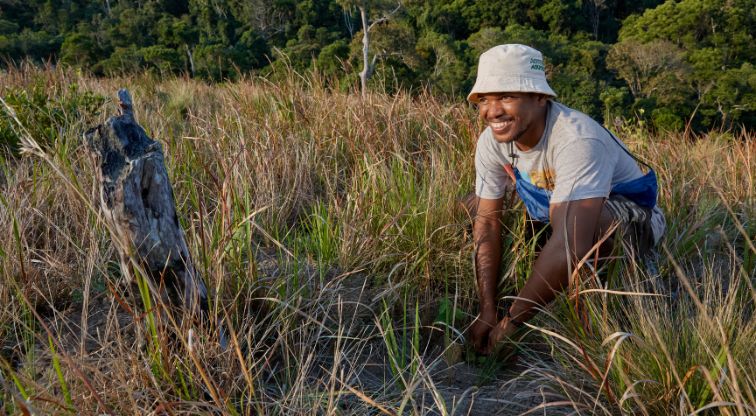
We know today that there are areas of the world (for example in the Middle East) that will become too hot and uninhabitable. If this is the case for southern Madagascar, we must expect massive migrations. Madagascar being an island, the vast majority of the population will not be able to leave the country. We will have to manage potentially massive population movements between regions.
To put things in perspective: the ongoing destruction of the Menabe forest is partly explained by the arrival of a few thousand people from Androy. The consequences are already very serious. But the climate migrations forecast by 2050 will probably be of an entirely different scale: they would be counted in millions of people, not thousands. This phenomenon will be aggravated by Madagascar’s demographics. Let’s not forget that the population has already doubled in a quarter of a century, and is expected to double again by 2040. Madagascar is already in a very difficult economic, social, and environmental situation today, but in light of climate projections and their consequences, it is possible that in 10 or 20 years we will look back on the current period with nostalgia.
In many regions of Madagascar, millions of farmers are still able to live on the land of their ancestors and cultivate it under admittedly difficult conditions, but ones that allow them to live. This is by no means guaranteed in the future. There is a real risk of an explosion of malnutrition, famines, and internal migrations that could plunge the country into chaos.
It is essential to understand that climate change is an existential risk for Madagascar — not only for future generations, but also very concretely for the current generations.
What solutions can be put in place at the national level to prepare for the climate disasters to come?
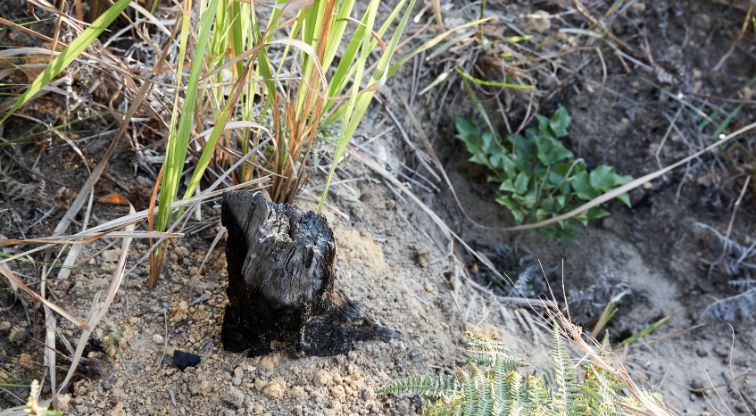
First of all, the issue of water is fundamental. For a population that is 80% rural to live, there must be water. Not too much water at once, nor too little: there must be a reliable and regular water resource.
However, climate change is likely to have various negative effects on this resource: on the one hand, increasingly long droughts, and on the other, very violent rains causing severe flooding. In both cases, having a healthy plant cover is a determining factor in reducing negative impacts.
On drought, we know very well that regions with forests generate their own humidity, their own clouds, and receive more frequent rainfall. And against the risk of flooding, the forest serves as a regulator — it functions like a sponge that allows the storage of large quantities of water and its regular redistribution.
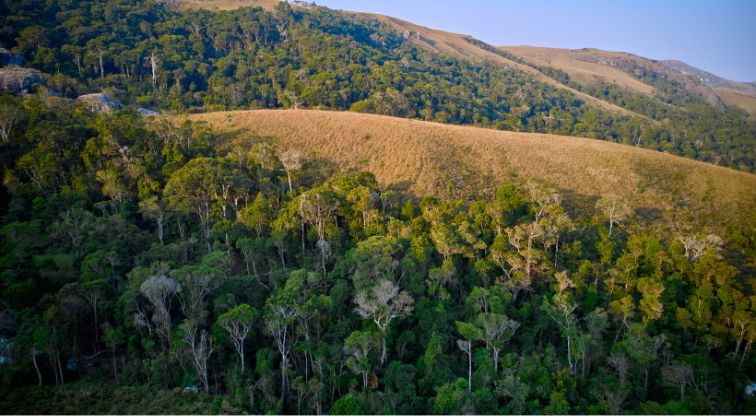
We must therefore restore landscapes and forests, without forgetting to protect the primary forests that still exist. The Menabe forest, for example, has evolved over thousands of years to adapt to an arid climate and irregular rainfall. It is imperative to put an end to its destruction now. It is illusory to think that we can destroy this natural forest and replace it later with a 2-3 species reforestation that would have the same climate resilience.
Fire plays a major role in deforestation in Madagascar. Will climate change worsen this trend further?
The fire problem is already serious. The remaining Malagasy forests are quite fragmented, so we will probably not see huge fires extending hundreds of kilometres as in Siberia or Canada. That said, climate change will significantly worsen the problem, and we must prepare for it. It is imperative to strengthen prevention and firefighting capacities now. INDRI facilitates a multi-stakeholder initiative called Alamino (or Agora of Landscapes and Forests of Madagascar) and we have made the issue of fires a priority. We propose, for example, to test the use of helicopters to extinguish fires in order to prepare now for an increase in their scale.
What is the impact of climate change on Madagascar’s coastal landscapes?
Madagascar has the longest coastline of any African country. With rising sea levels and intensifying cyclones, it is clear that the coasts will experience increasingly severe flooding and destruction. Many people could be forced to leave their villages.
To address this, ecosystems are again valuable allies. We saw, for example, during the 2005 tsunami in Asia, that coastal areas where mangroves had been preserved were much less impacted. Madagascar has already lost 20% of its mangroves: it is imperative to stop this destruction and replant what has been lost.
Another major challenge is to better protect the coral reefs that are today threatened by climate change and local pressures. Their disappearance would lead to an unprecedented disruption of human life along a large part of Madagascar’s coastline, particularly in the West.
The capital, Antananarivo, is not on the coast. Is that an advantage given climate risk?
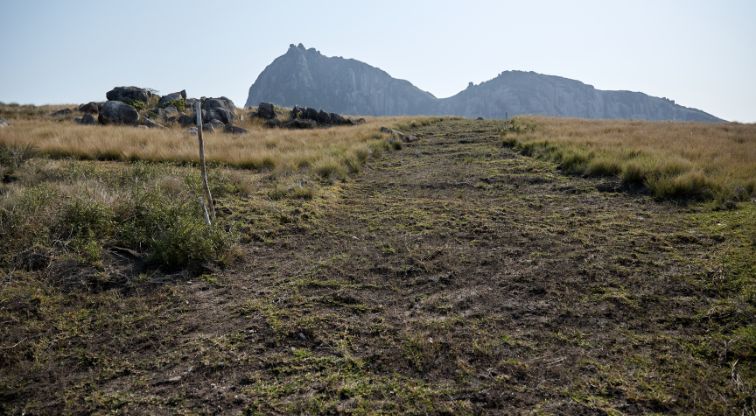
Yes — the most populated city is therefore not directly exposed to rising sea levels. However, the capital is very vulnerable to flooding, which climate change will worsen. In response, prevention measures are necessary. The first priority is to stop the proliferation of new infill works, which worsen flood risks by preventing water from following its course. Each time an infill is built, we increase the human and economic cost of extreme weather events that are set to intensify. Today, on the contrary, we must preserve floodplains and prioritize construction on the hills, as was historically the case before the colonial period.
The other major climate risk for Antananarivo is food security. How will the capital feed a sharply rising population if crops are impacted by climate change? Here too, we must start by stopping the infill of rice paddies, which are crucial for feeding the population.
How can we avoid famine in the face of climate risks?
First of all, the answer cannot be an acceleration of tavy. On the contrary, lasting solutions to this practice must be found. Agricultural production based on slash-and-burn is taking the country into a wall. The last forests are disappearing while it is crucial to preserve them in the face of climate change.
Beyond that, I believe a strategy is needed to make use of the immense unexploited land areas, by encouraging investment in crops adapted to climate change that can generate jobs at scale. The challenge is twofold: meeting the food needs of Malagasy people, but also seizing export opportunities, since global food demand keeps growing.
We are already seeing very interesting examples of success in this area, particularly with organic farming (read the interview with Gaëtan Etancelin). It shows that we can position Madagascar on the world market with quality, high-value products that secure lasting income and create jobs.
Are there other opportunities for Madagascar in the face of climate change?
Yes! First of all, I think Madagascar has a major opportunity to seize in solar energy. It is the most promising energy source globally, and panel prices have been falling dramatically over the past 10 years. Madagascar has a territory ideally suited to its development, with a very high level of sunlight and large available spaces.
Increasingly, investors are looking to produce consumer goods labelled 100% renewable energy. Madagascar — which, for example, has a textile industry already employing more than 400,000 people — could seize these opportunities.
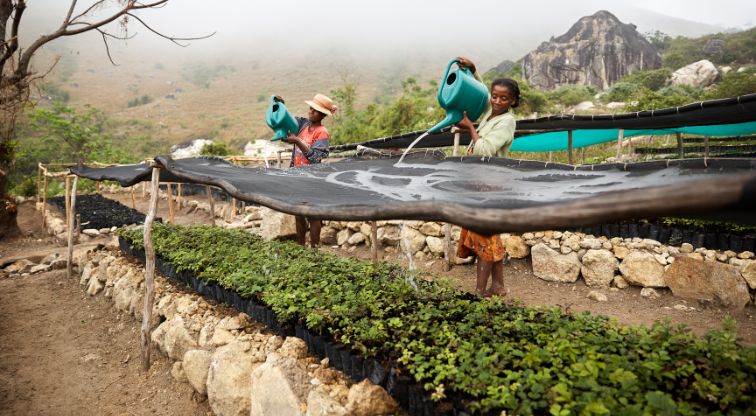
Second example: reforestation and landscape restoration. It is clear that humanity will need to stabilize and then reduce the level of CO2 in the atmosphere. To capture this CO2, one of the options is to plant very large forests. It is obvious that there will be massive financing in this field, and that countries with available space for reforestation will attract increasing attention. Madagascar has very large degraded areas that could be the subject of massive regreening. This would not only help fight climate change, but also restore better soil fertility and a more regular water resource.
We see thus that the climate crisis also brings opportunities — opportunities that can create many jobs, restore confidence in the country, and position Madagascar as a leader of the green economy. To do so, we need to develop strong national strategies, with broad consensus among the government, the private sector, the population, civil society, and donors. This is exactly what INDRI is trying to do, in support of the authorities.
The climate COP 26 will be held in Glasgow next November. What is the stake for Madagascar in these international negotiations?
First of all, an enormous injustice must be recalled: Madagascar is not responsible for climate change but is nonetheless among the countries most severely threatened by its effects. It is the developed countries that bear overwhelming responsibility for the current situation, since they have been emitting continuously since their industrial revolution. Even today, an American citizen emits on average 130 times more CO2 than a Malagasy! The stake for Madagascar is to draw the international community’s attention to this climate injustice, and to compel it to show solidarity by helping the country face the immense challenges awaiting it in this crisis.
It’s known that the COP process is often slow and has so far failed to reverse the trend. Is it really worth Madagascar’s while to take part in these negotiations?
Of course the process is frustrating. But the world’s countries have agreed on a process of collaboration, and everyone must play the game for things to move forward.
Furthermore, I think Glasgow is an opportunity for the country to present a strong vision capable of holding the international community’s attention. But for the proposals to be credible, they must be prepared with the diversity of Malagasy stakeholders, with genuine consensus and an implementation plan. The proposal-preparation phase is therefore crucial.
Two years ago, the President made regreening a national priority, and I think Glasgow is a strategic opportunity for Madagascar to strengthen this vision in order to attract international funding, which can enable this regreening — provided we have a clear strategy to carry it through.
Climate funds will increase substantially in the coming years. It is crucial that Madagascar position itself as a country with a clear and credible vision for regreening and adaptation to climate change. But this discourse on the international stage cannot be artificial. To be credible, Madagascar must better protect its forests, starting with the Menabe Antimena Protected Area, whose situation is catastrophic. Furthermore, regreening must be the subject of genuine consensus with civil society, the private sector, and all stakeholders. Malagasy collective intelligence must be mobilized — that is why INDRI will continue to support the authorities in facilitating exchanges, in close cooperation with the Ministry of the Environment and Sustainable Development.